

Sorceress is an AI asset studio for game developers, and it’s one of the better things I’ve looked at this year. Be specific about why, because the reason is more interesting than the product.
Everything here comes from the public site, the tool list, the docs and the free tier, as of 4 August 2026.
What it actually is
Two products sold as one. Sorceress is the asset studio: thirty-odd tools covering 2D sprites, 3D models, rigging, animation, voxels, tilesets, image cleanup and audio. WizardGenie is an AI game engine, where you describe a game in plain English and it writes and runs the code in front of you.
It’s $49 once, everything they ship later included, with a free tier of 100 credits so you can try before you commit an amount most studios lose down the back of the sofa.
The asset tools
This half is very good, in a boring way that suggests somebody involved has actually shipped a game.
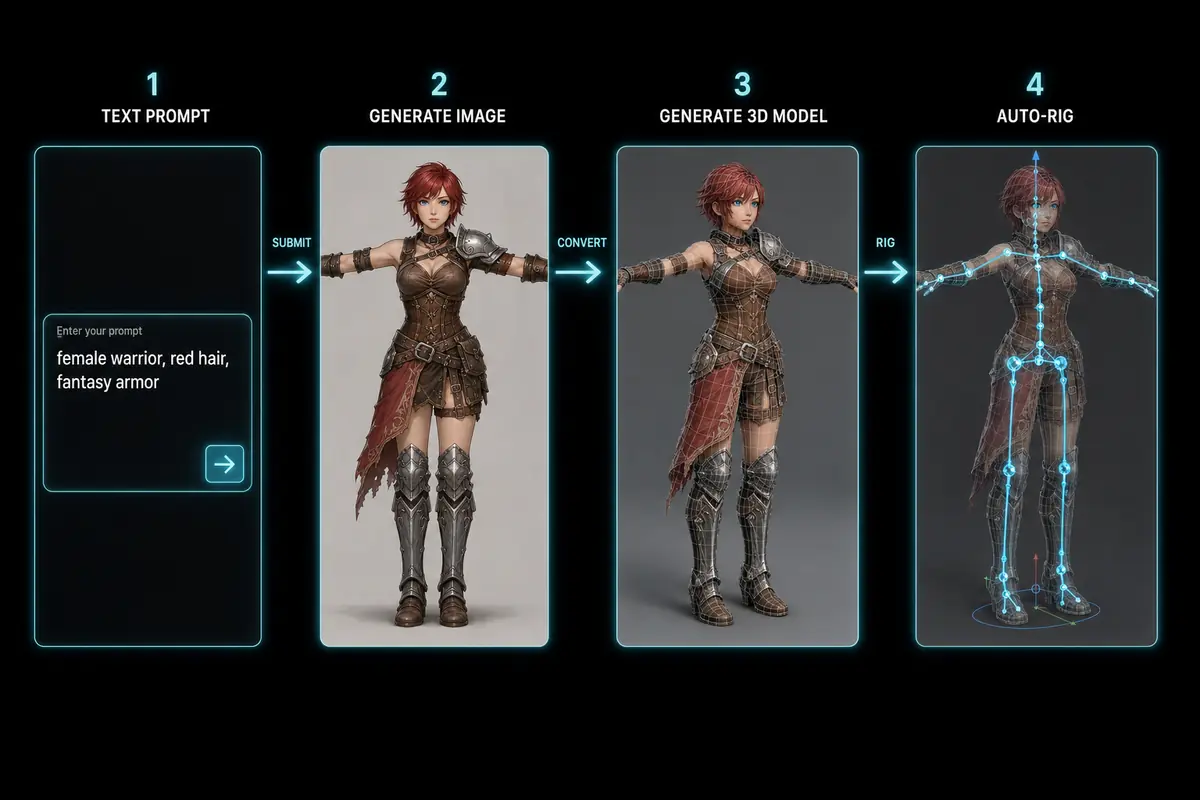
Take the 3D path. A prompt becomes an image, the image becomes a model, the model comes back rigged.
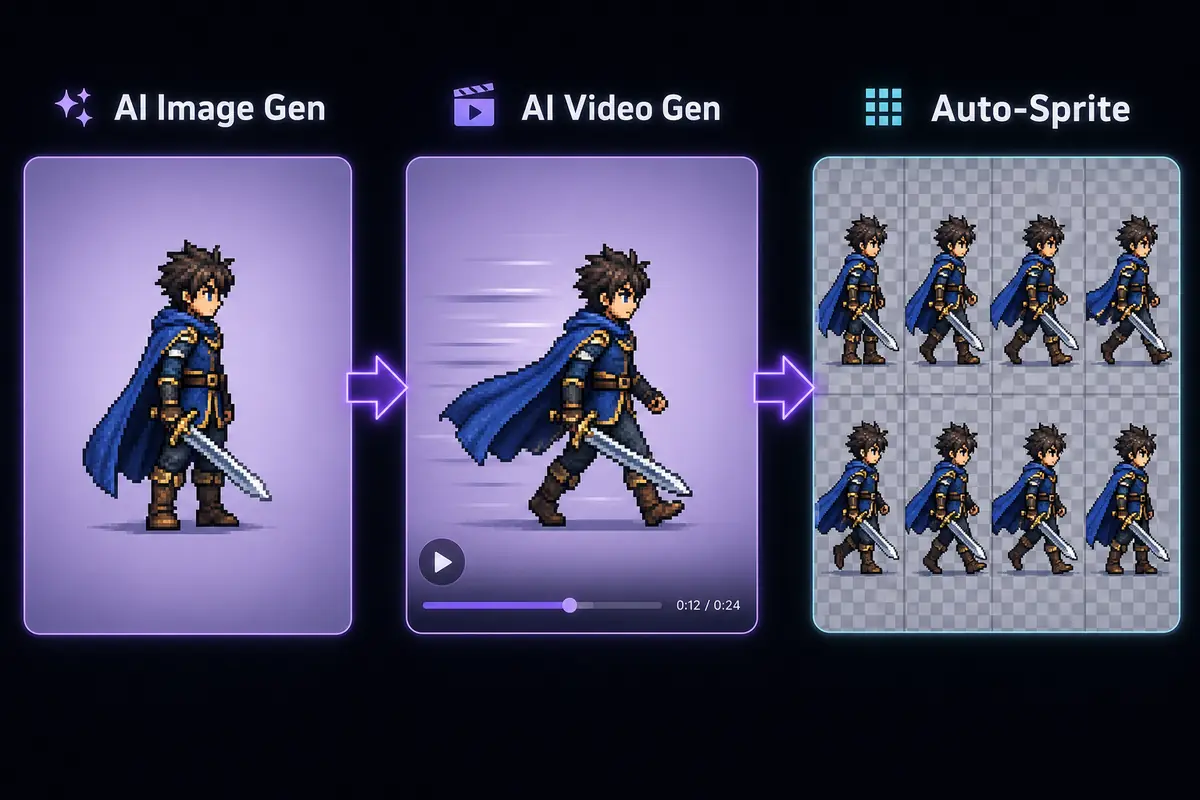
The sprite path gets there sideways: a still image, then a generated video of the character moving, then the frames cut into a sheet.
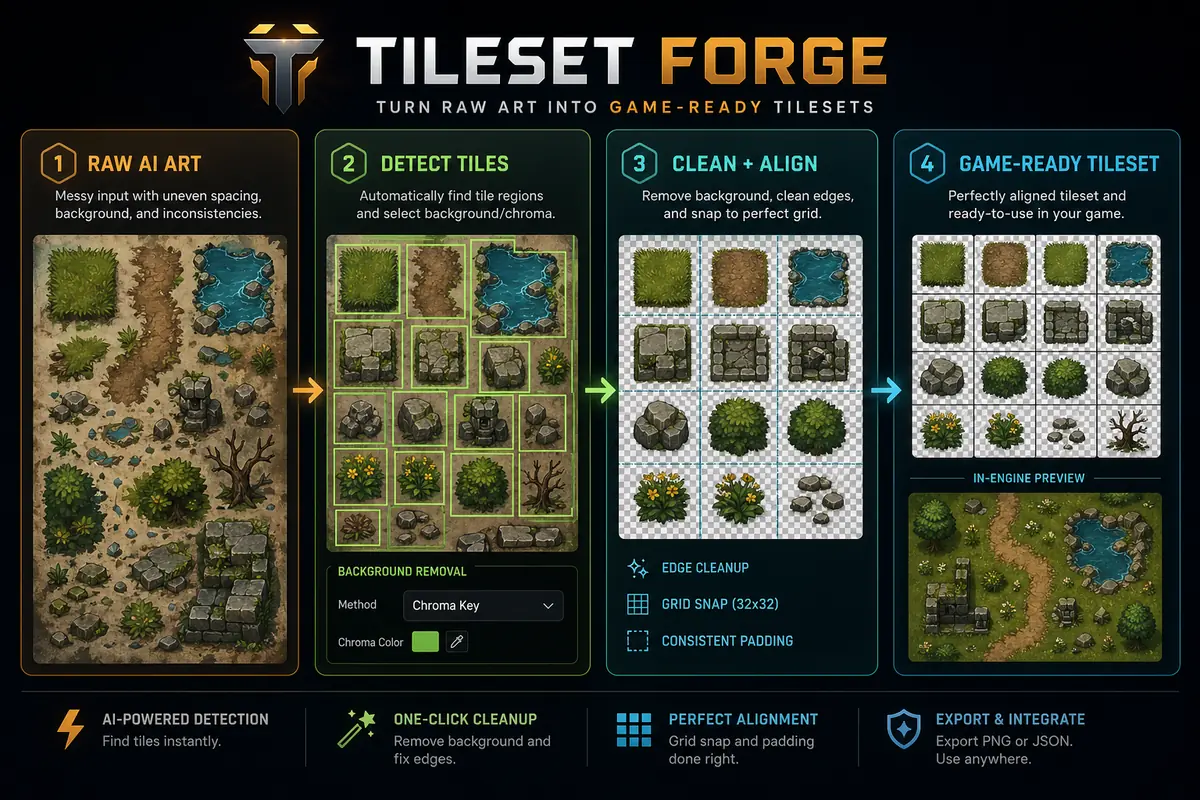
Tileset Forge takes the messy square of AI art everyone already has sitting in a folder and turns it into something with even padding on a 32×32 grid.
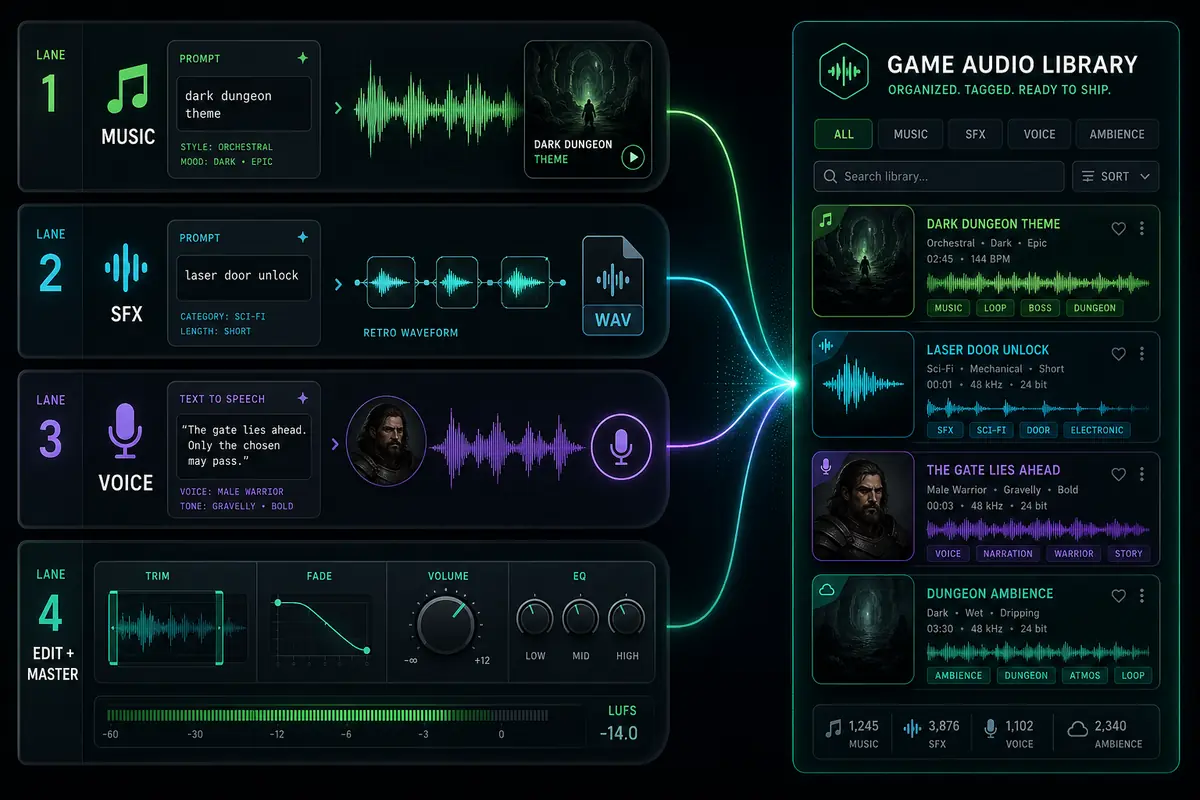
And the audio studio turns out music, SFX, voice and ambience into a tagged library with an editor attached.
Why this is the right problem to have picked
There’s a pattern running through all of it, and it’s the useful thing to take away: these tools are reliable exactly where you can check the answer at a glance. Look at a walk cycle and you know straight away whether it’s wrong. Look at a tileset and you can see the seams. Checking costs you nothing, so it stops mattering how often the tool misses. You run it again, and the bad attempt cost you nothing, because nothing else was relying on it.
That last part is doing more work than it looks. Nothing in your project imports a tree. A tree has no callers and holds no state. If the tree is bad you delete the tree, and that’s the end of it. Which is why an asset tool can be wrong four times out of ten and still be worth $49.
No game has ever shipped late because of a bad rock.
Sorceress has pointed nearly its whole product at that, and it’s a better instinct than most of this category has shown.
WizardGenie
The other half is an engine, and to its credit it’s straightforward about what it is. The screenshot answers the question the sales copy leaves open.
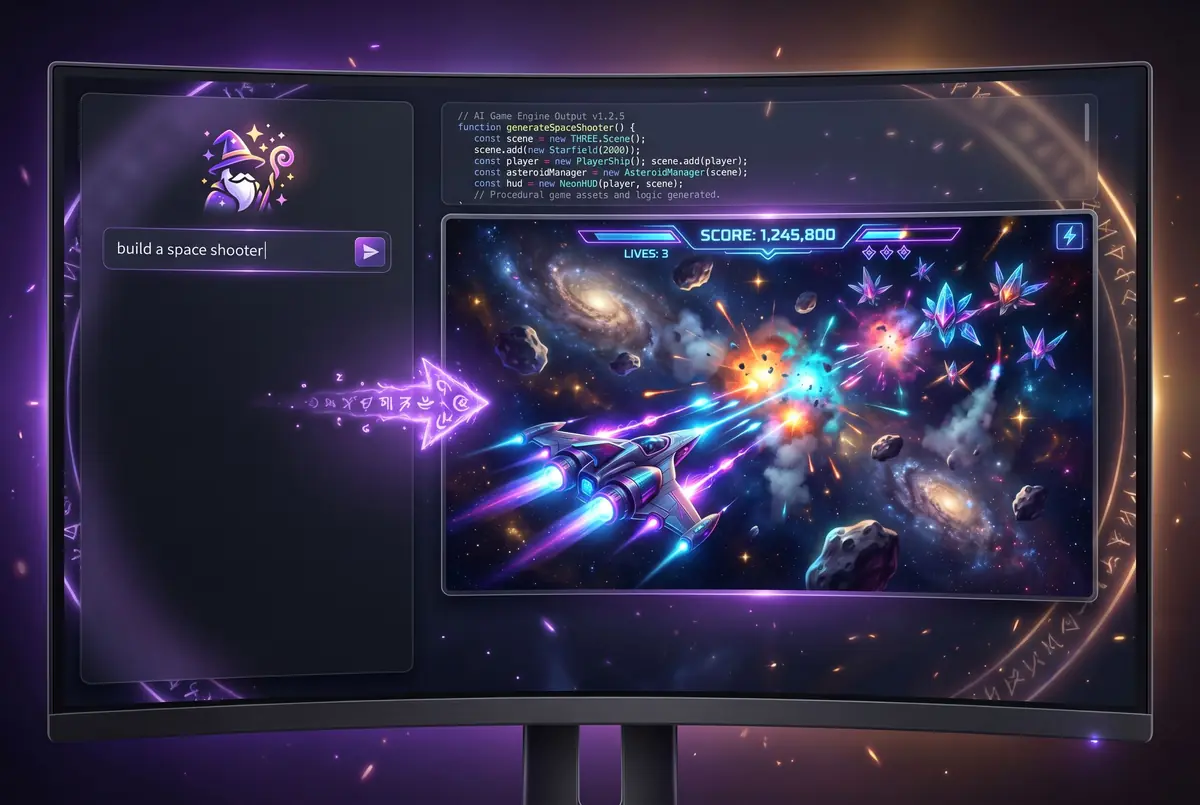
new THREE.Scene(). It's a browser engine, and it publishes to the Sorceress Arcade or to GitHub Pages.For jam games, playable pitches, browser toys and mechanics you want to feel before spending a month on them, that’s a good product honestly described, and shipping to a URL instead of through console cert is the right trade for who it’s aimed at. Prototyping is a real job and most studios do too little of it.
Getting the most out of it
If you ship 2D or 3D assets, buy it. At $49 the maths is easy: it’s less than an hour of anybody’s time, and the tileset cleanup alone pays it back the first afternoon you use it. This is one of the easier recommendations I’ve made.
A few things worth doing on the way in:
- Version the exports and keep the prompt with them. Assets regenerate. What you were going for doesn’t. Six months from now somebody will ask which prompt made the enemy set, and a folder full of
final_v3_ACTUAL.pngwon’t answer that. - Treat the audio as a source, not a master. Take the generated stems, then do your loudness pass against your platform’s requirements rather than the tool’s default.
- Give the rigs a pass before they go in a controller. Auto-rigging gets you a skeleton, not a decision about how the character moves, and the second one is where the animation budget actually goes.
- Prototype in WizardGenie freely. If it’s answering “is this mechanic fun”, a browser engine and a fast loop is exactly the right tool for that.
Is Sorceress right for you?
- You’re a small team without a full-time artist. This is the strongest case for it by some distance, and $49 is not a decision anyone needs to take to a meeting.
- You’ve got art but it’s a mess. Tileset Forge and the image cleanup tools are worth the money on their own if you’ve been hand-fixing padding.
- You’re prototyping, or making jam games and browser games. WizardGenie, and publish straight to a URL.
- You need placeholder assets that don’t look like placeholders. Greybox is faster, but nobody has ever green-lit a greybox.
And one where the answer is that it’s a different question. If what’s in front of you is a codebase that has to survive three platforms, a cert pass and two years of design changes, that’s a maintenance problem rather than a material one, and it was never the assets that made it hard.
The verdict
It’s the best-aimed AI game tool of the year so far, because it put its effort where mistakes are cheap to spot instead of where they’re expensive. More of that, please.
One prediction, written down so it can be checked later. On the games that come out of this, the art and the audio will be the least of anyone’s problems.
Screenshots are Sorceress’s own product images, from sorceress.games, reproduced here for review. I have no commercial relationship with them.